

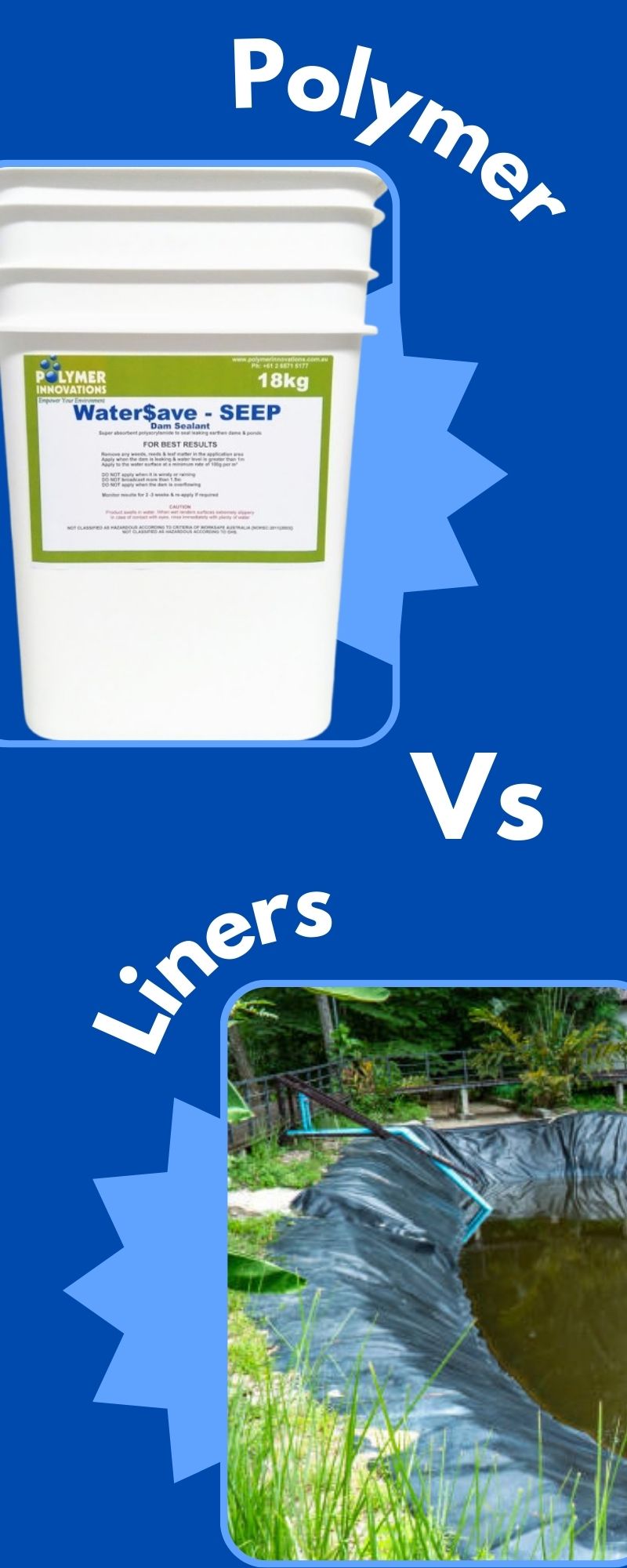
Leaking dams & ponds are a common & costly problem across rural Australia. Whether it’s water seeping through porous soil or draining through a cracked dam wall, the result is the same: wasted water, reduced productivity & growing frustration.
Traditionally, many property owners have turned to plastic liners, sometimes called geomembranes, dam liners or pond liners, as a fix. Liners can come with significant challenges. In recent years, polymer sealers have emerged as a smarter, more practical alternative, especially for landowners looking for a cost-effective, non-disruptive & environmentally safe solution.
The Problem With Plastic Liners
Plastic liners function as a physical barrier, placed across the dam bed & walls to prevent water from interacting with the underlying soil. While the concept is simple, execution is not. Installing a liner usually requires completely draining the dam, reshaping the base, removing rocks or vegetation & deploying heavy equipment to spread, weld, or anchor the liner into place. For rural sites, this often means hiring external contractors, scheduling machinery & potentially losing weeks of water storage in the process.
Once installed, liners are vulnerable to damage. Tree roots, sharp rocks, animal activity (like wombats, rabbits or cattle), UV exposure & normal ground movement can all cause punctures or tears. Worse still, damage is often invisible beneath the waterline, meaning the only way to locate & repair it is by draining the dam again.
Why Polymers Are a Better Choice
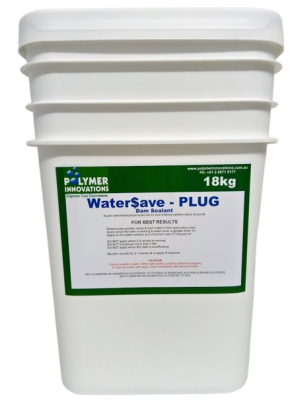
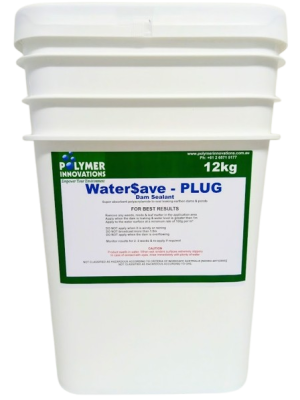
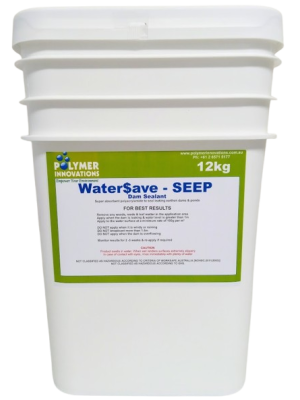
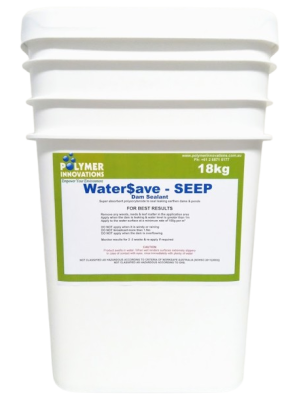
Polymer-based dam sealers, such as Water$ave Plug & Water$ave Seep, work differently. Rather than creating a barrier above the soil, these products are designed to migrate into the soil & seal from within. Once applied to the water surface, the dry polymer granules float briefly, then begin to sink & disperse through the water column. As water is naturally drawn into leak zones, the polymers follow, entering cracks, voids or porous soil. On contact with moisture, they swell into a flexible gel, forming a plug that slows or stops the leak. This method doesn't just mask the problem; it targets the source of the leak directly, all without draining the dam or disturbing the surrounding landscape.
Comparing Installation & Ease of Use
Installing a plastic liner requires significant preparation, including grading the dam base, removing debris, securing overlaps & installing anchor trenches. Depending on the site, this process can cost tens of thousands of dollars & require several days of work.
In contrast, applying a polymer sealer is quick, simple & DIY-friendly. All that’s needed is a basic understanding of the leak location & an ability to apply granules evenly over the surface. With no need for pumps, machinery or structural changes, even large dams can be treated in under a day. This makes polymer sealers an ideal choice for remote areas, properties with limited equipment access or landowners looking to avoid major disruption to their water supply.
Long-Term Performance & Flexibility
Plastic liners are rigid by nature. Once damaged, they can’t self-repair & locating the problem requires draining the dam. While patching is sometimes possible, it’s usually expensive & temporary.
Polymers are far more adaptable. If a leak reappears months or years later due to soil movement, animal activity or new erosion, a second polymer application can be completed with minimal effort or cost. There's no need to remove the previous application or alter the structure of the dam.
Many customers who have tried bentonite clay or liners in the past have switched to Water$ave products after being disappointed with the results. Unlike clay, which can disperse unevenly or break down in certain conditions, polymers are engineered for consistent performance, even in coarse or sandy soils.
Environmental & Agricultural Compatibility
Plastic liners isolate the water from the soil completely. While this is sometimes necessary, it can have negative effects on natural biological processes within the dam, such as beneficial bacteria, aquatic plant growth & nutrient cycling.
Polymer sealers allow the dam to function more naturally. Because the product binds within the soil structure itself, water can still interact with the environment safely without escaping through cracks or leaks. Importantly, Water$ave products are non-toxic, biodegradable when broken down over time & safe for livestock, wildlife & aquatic life when used as directed.
The Verdict: Polymers Are the Practical Choice
In real-world conditions, polymer sealers consistently outperform plastic liners for existing dams & ponds. They’re faster to apply, easier to maintain & more cost-effective, all while delivering powerful, long-term sealing performance.
Whether you’re managing a small hobby farm dam, a stock water source or a catchment pond, Water$ave polymers provide the flexibility & efficiency that plastic liners simply can’t match.
Ready to Seal Your Dam?
If you're considering options to fix a leaking dam or pond, speak to the team at Polymer Innovations. With over 20 years of experience supporting Australian landowners, councils & contractors, we’ll help you choose the right product for your dam, soil type & water conditions.
You can request a FREE dam assessment, get a quote, or browse the full Water$ave range online.
Visit: www.polymerinnovations.com.au
Call: +61 2 6571 5177
Stop leaks from the inside out — with Water$ave Dam Sealers.

Comments