

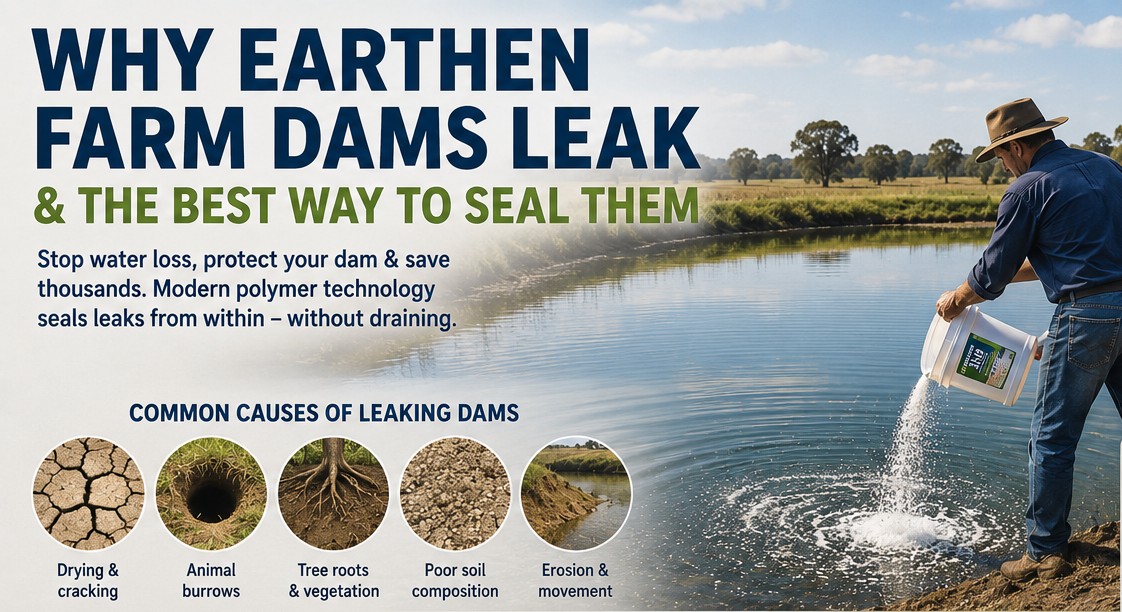
A farm dam should hold water, not constantly lose it. Yet many rural landholders notice their dam levels slowly dropping year after year without understanding why. While evaporation plays a role during hot Australian summers, excessive water loss is often a sign that the dam structure itself is failing.
Leaks in earth dams rarely fix themselves. In fact, they usually worsen over time as water pressure enlarges cracks, tunnels & porous zones within the soil. The longer the problem is ignored, the greater the water loss & the higher the repair costs can become. Understanding why dams leak & how to stop the problem early is essential for protecting your water supply, livestock, irrigation & overall farm productivity.
Not All Water Loss Is Evaporation
Many leaking dams are initially dismissed as “just evaporation.” However, evaporation alone usually occurs gradually & consistently depending on weather conditions. If your dam level drops rapidly during mild weather or continues falling after rainfall, there is likely a structural issue allowing water to escape beneath or through the dam wall. Even small leaks can waste enormous volumes of water. A dam losing only a few centimetres each week may already be losing thousands of litres every day.
The Most Common Reasons Earth Dams Leak
Earth dams rely heavily on soil structure & compaction. Over time, natural movement in the soil can create weak areas where water begins escaping. One of the biggest causes is poor soil composition. Sandy, gravelly or rocky soils allow water to move more freely unless properly sealed. Dams built with insufficient clay content are particularly vulnerable to seepage.
Older dams may also suffer from years of erosion, sediment movement & vegetation growth. Tree roots penetrating the embankment can slowly create underground seepage channels that are difficult to detect until water loss becomes severe.
Dry weather can also contribute to leakage problems. As dams dry out, the soil contracts & cracks begin forming throughout the wall and base. Once rain returns & the dam refills, water pressure forces water into these cracks, gradually expanding them further.
Animal activity is another major issue across rural Australia. Wombats, rabbits & yabbies regularly create tunnels through dam walls & embankments. These tunnels become direct pathways for water loss & can eventually weaken the overall structure of the dam.
Early Warning Signs Your Dam May Be Failing
Leaks usually begin with subtle warning signs. Catching them early can prevent far more expensive repairs later. One of the clearest indicators is unexplained water loss. If the water level continues dropping despite cooler weather or low usage, seepage is likely occurring.
Wet patches or boggy ground below the wall are also common signs. These areas often stay damp long after surrounding ground has dried. Cracks, slumping or soft spots along the embankment may indicate water is eroding soil internally. Unusual green vegetation growing below the wall can also signal underground seepage feeding moisture into surrounding soil. In some cases, cloudy water near inflow points or embankments may indicate soil movement within the dam structure itself.
Why Traditional Repairs Aren’t Always Practical
Repairing a leaking dam often means draining it completely, importing clay or bentonite & using heavy machinery to reconstruct sections of the wall or base. While these methods can work, they are often expensive, labour-intensive & disruptive. For working farms or lifestyle properties relying on that water source, taking the dam offline for repairs may not be realistic. That’s why many Australian landholders are now turning to polymer-based sealing solutions.
A Simpler Way to Seal Leaking Dams
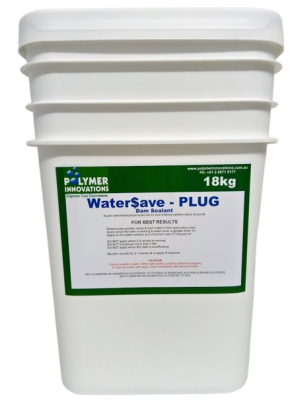
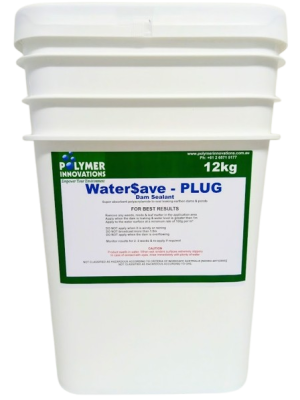
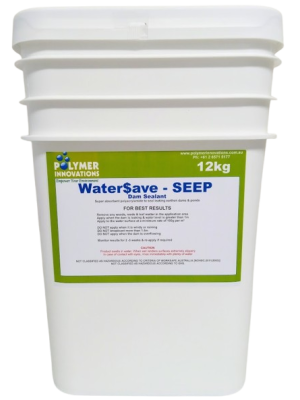
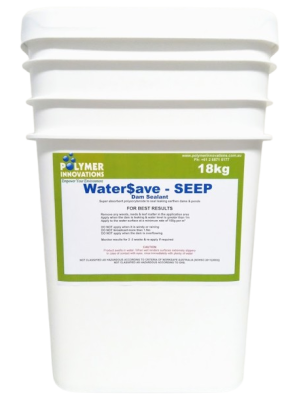
Water$ave Dam Sealers is a polymer solution that provides a modern, DIY-friendly solution for repairing leaking earth dams without draining them. Water$ave Plug or Water$ave Seep are applied directly to the water surface of full or partially full dams. Once in the water, the polymer granules sink & are naturally drawn toward active leak pathways through water flow & pressure. As the granules absorb water, they expand & form a flexible internal seal within cracks, leaks & porous soil. This process allows leaks to be sealed from within the dam structure itself.
Which Dam Sealer Is Right For My Dam?
Water$ave Plug is best suited to:
- Fast or severe leaks
- Coarse, rocky or gravelly soils
- Leaks from the dam base
- Water loss greater than 150mm per week
Water$ave Seep is designed for:
- Fine or sandy soils
- Slow seepage
- Wall leaks & embankment seepage
- Wet areas without visible water flow outside the dam
Both products are:
- Completely DIY friendly
- Safe for livestock & irrigation
- Easy to apply by hand or spreader
- Proven across Australian farming conditions for over 20 years
Stop Water Loss Before It Becomes Structural Damage
Minor leaks rarely stay minor for long. As water continues escaping, the surrounding soil weakens & erosion accelerates. Acting early helps preserve your dam structure, maintain water availability & reduce long-term repair costs.
A leaking dam affects far more than water levels. It impacts livestock health, irrigation reliability, grazing flexibility & overall farm efficiency. Protecting your water storage now can save significant time & money later.
Need Help Finding the Right Solution?
If your dam is losing water & you’re unsure where the leak is coming from, Polymer Innovations can help. Our Dam Experts can assess your situation & recommend the most suitable Water$ave Dam Sealer for your soil type, leak severity & dam conditions.
Visit our Solutions page for more information or call:
+61 2 6571 5177
Free dam assessments are available online.

Comments