

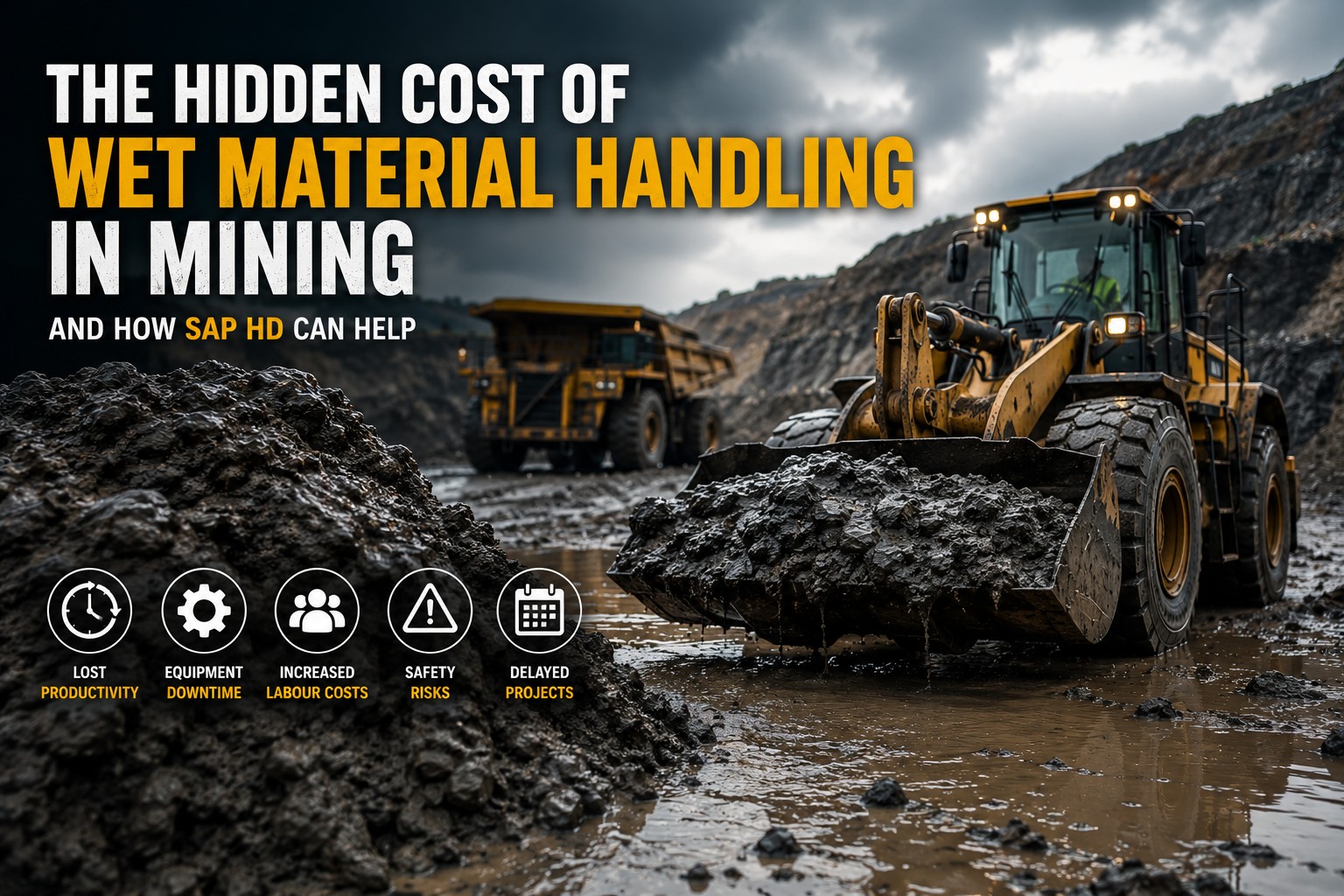
In mining, excessive moisture doesn't just create an inconvenience. It creates delays, increases operating costs & impacts productivity across multiple areas of a site. Wet slurries, water slimes & saturated spoil can slow down production, reduce equipment efficiency & expose personnel to unnecessary risks. While these issues are often accepted as part of mining operations, the true cost of wet material handling is frequently underestimated. Understanding these hidden costs can help operations identify opportunities to improve efficiency & protect their bottom line.
Lost Productivity
When wet material becomes difficult to manage, production schedules often suffer. Excavators may struggle to handle unstable spoil. Loaders can experience reduced efficiency. Access routes may become difficult or unsafe to navigate. Crews may spend valuable time attempting to manage conditions instead of progressing planned work. Even short interruptions can have a compounding effect on productivity targets.
Equipment Downtime
Heavy equipment is designed to perform efficiently under suitable operating conditions. Excessively wet material can reduce cycle efficiency & increase wear on machinery. Operators may be forced to slow production rates, while some areas may become temporarily inaccessible altogether. Delays associated with cleaning, repositioning equipment or waiting for conditions to improve all contribute to higher operating costs.
Increased Labour Costs
Managing wet conditions often requires additional labour resources. Personnel may be diverted from planned activities to undertake clean-up operations, move unstable material or implement temporary solutions. This results in increased labour expenditure without corresponding gains in production output.
Safety Risks
Water slimes & saturated spoil can present significant hazards. Slip & trip risks increase. Vehicle movement can become more challenging. Restricted access to work areas can impact operational efficiency & emergency response capabilities. Improving the stability of wet material not only supports productivity but also contributes to safer working environments.
Delayed Rehabilitation & Civil Works
For operations undertaking rehabilitation, excess moisture can delay shaping, placement & preparation activities. Similarly, civil contractors working on mining projects may encounter groundwater that disrupts excavation & earthworks schedules. Waiting for material to dry naturally can extend project timelines & increase costs.
A Faster Alternative
Traditional approaches to managing wet material often involve waiting for evaporation, relocating spoil or implementing time-consuming dewatering strategies. SAP HD provides a more proactive solution.
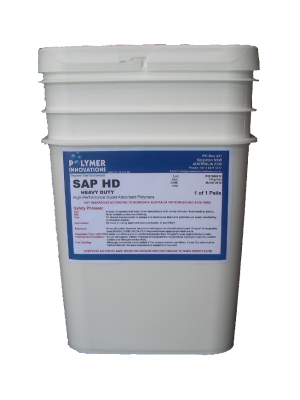
Applied directly to wet slurries, water slimes & saturated material, SAP HD absorbs excess moisture & transforms unstable material into a firmer, more manageable state. Capable of absorbing up to 300 times its own weight in water, SAP HD allows operations to respond quickly to changing conditions & minimise disruption.
How SAP HD Helps Reduce Costs
By improving the workability of wet material, SAP HD can assist operations to:
- Restore access faster
- Reduce production delays
- Improve equipment utilisation
- Minimise labour-intensive clean-up
- Support safer site conditions
- Keep rehabilitation & construction activities on schedule
Turning a Problem Into A Productivity Opportunity
Wet material handling will always be part of mining. However, the associated costs don't have to be accepted as unavoidable. With the right tools & procedures, mining companies can reduce delays, improve efficiency & better manage the challenges that excess moisture creates.
SAP HD provides a practical, easy-to-use solution that helps sites maintain momentum when wet conditions threaten productivity. For mining operations focused on reducing downtime & improving operational performance, SAP HD offers a smarter approach to moisture management.
SAP HD is available here. For bulk order enquires here.

Comments