

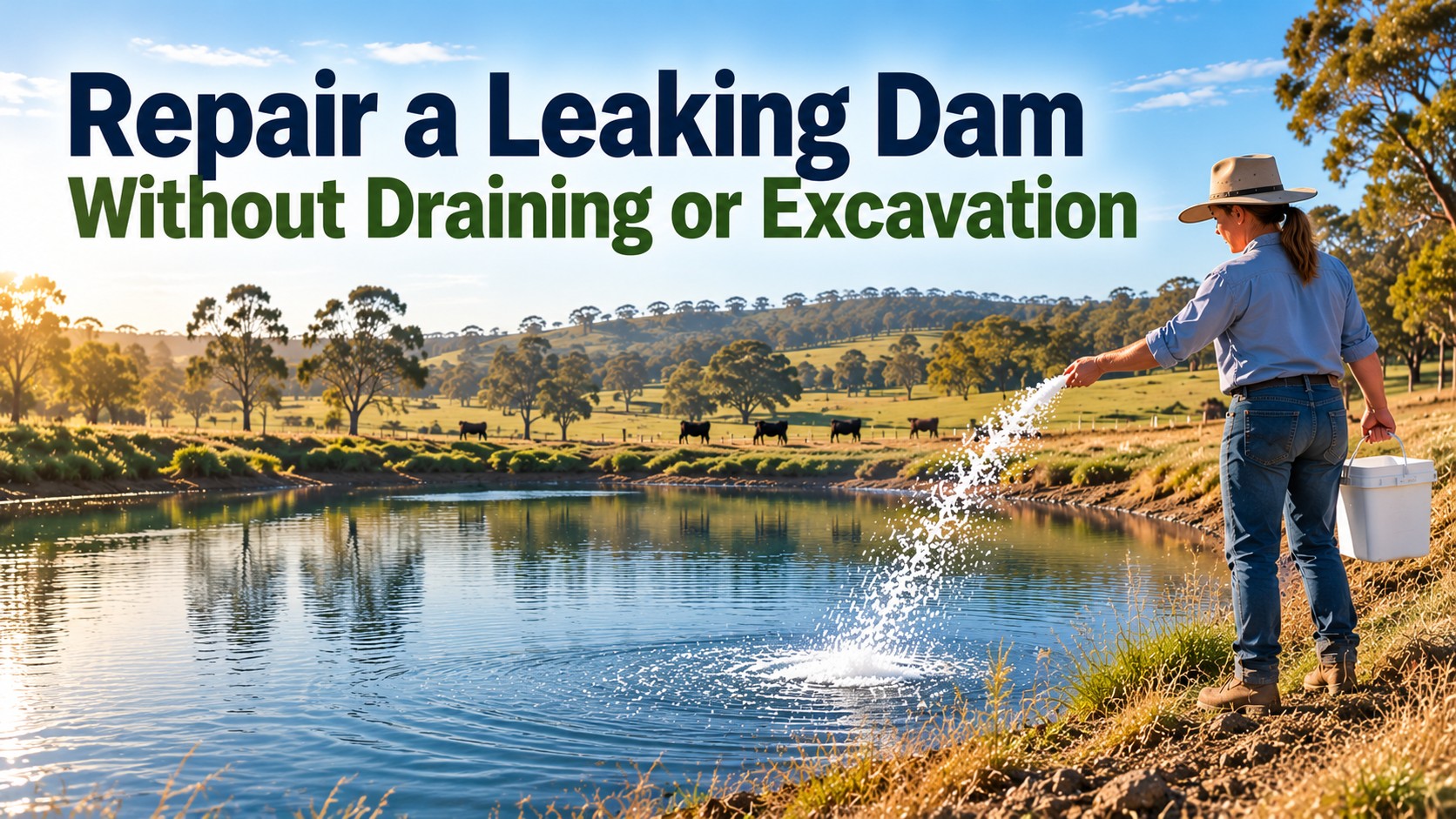
A leaking farm dam can quickly become an expensive problem. When water levels continue to fall, many property owners assume the only solution is to drain the dam, excavate the affected areas or install a new liner. These approaches can involve machinery, labour, material costs & significant disruption to the property's water supply. But what if the dam could be sealed without emptying it?
Water$ave Dam Sealers offer a simpler, DIY alternative to traditional dam repairs, allowing leaks to be treated while water remains in the dam. Before committing to major earthworks, understanding how polymer dam sealing works could save considerable time, effort & expense.
Why Traditional Dam Repairs Can Become Expensive
When an earthen dam begins leaking, the cause may be difficult to identify. Water can escape through cracks, porous soil, poorly compacted areas or hidden pathways beneath the waterline. Traditional repair methods may involve draining the dam to expose the problem, excavating soil, importing sealing materials or installing a liner. Each additional stage can increase the overall repair cost. If the dam supplies water for livestock or irrigation, alternative water arrangements may also be required while repairs are underway. For a dam that is structurally sound but losing water through soil leakage, this level of work may not always be necessary.
Don't Assume Major Earthworks Are Your Only Option
A leaking dam doesn't automatically mean expensive excavation, draining or reconstruction. For many earthen dams, polymer technology provides a practical alternative that targets leakage from within the soil. Water$ave Dam Sealers are designed to make dam sealing simpler, helping Australian property owners protect stored water without unnecessary disruption. Before spending thousands on major dam repairs, investigate whether your dam may be suitable for a Water$ave Dam Sealer application.
A Different Approach: Seal the Leak Without Draining the Dam
Water$ave Dam Sealer use polymer technology to target leak pathways from within the dam's soil structure. Instead of removing water to reach the leak, the products are applied directly to the existing water surface. The dry polymer crystals sink through the water & are drawn towards active leaks by the movement of escaping water. Once they enter cracks, voids or porous areas, the polymer absorbs moisture & swells, helping form a flexible seal within the soil.
This process allows the dam to remain full or partially full during application. There is no need to excavate the dam floor, install a plastic liner or bring in heavy machinery for the polymer application. The whole application is DIY. For rural property owners looking for a straightforward solution, this can make dam repair considerably more manageable.
Choosing the Right Water$ave Dam Sealer
Not all dam leaks behave in the same way, which is why Polymer Innovations offers two specialised products:
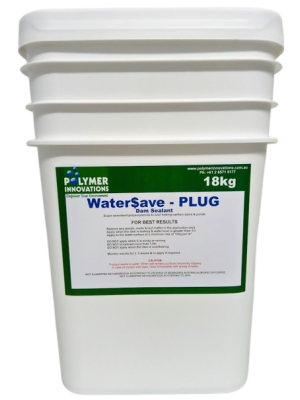
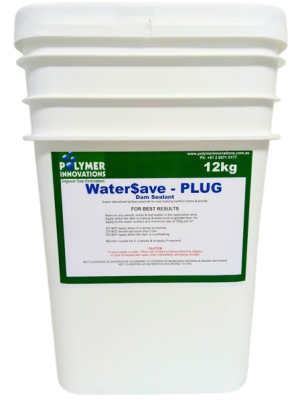
Water$ave Plug is suited to faster leaks where the dam loses more than approximately 150 mm of water per week. It is also commonly selected for leaks through the dam base, visible water flow outside the dam wall & coarse or rocky soil conditions.
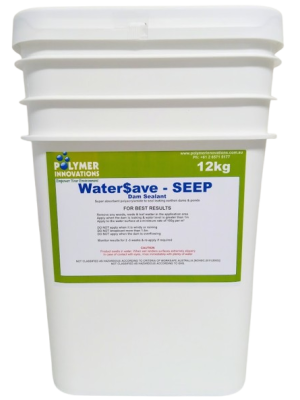
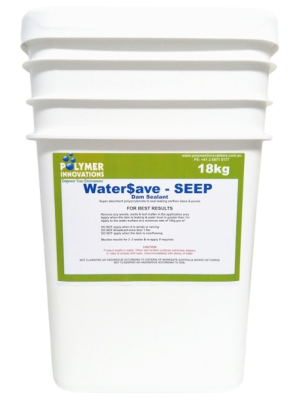
Water$ave Seep is designed for slower seepage, generally where water levels fall by less than approximately 150 mm per week. It is particularly suited to dam-wall seepage, fine or sandy soils & situations where wet areas appear outside the wall without visible flowing water.
Choosing the correct product is an important part of achieving effective results. Not sure which dam sealer is right for you? Submit Your Dam Details for a FREE dam assessment by one of our dam experts.
How Much Work Is Involved in Applying Water$ave Dam Sealers?
One of the major benefits of Water$ave Dam Sealers is their straightforward application process which is completely DIY. The process involves identifying the likely leak location, selecting the appropriate Water$ave product & broadcasting the dry crystals directly across the water surface over the suspected leak area. As the product sinks, it follows the movement of escaping water towards the leak pathway. Results will become apparent over approximately 7–10 days, depending on site conditions & the nature of the leak. As the process is DIY, many property owners can undertake the treatment themselves without professional installation but Polymer Innovations dam experts are always available to assist with any questions & offer advice.
Why Keeping Water in the Dam Matters
Draining a dam for repairs can create problems beyond the cost of excavation. For working farms, stored water may be needed for livestock, irrigation or other essential activities. Removing that water can interrupt operations & create additional expenses.
Water$ave Dam Sealers allow suitable dams to be treated while retaining their existing water supply. This is particularly valuable during dry periods when replacing stored water may be difficult. By avoiding unnecessary draining, property owners can protect valuable water reserves while addressing the underlying leakage problem.
Learn more about Water$ave Dam Sealers or speak with one of our Dam Experts NOW!

Comments