

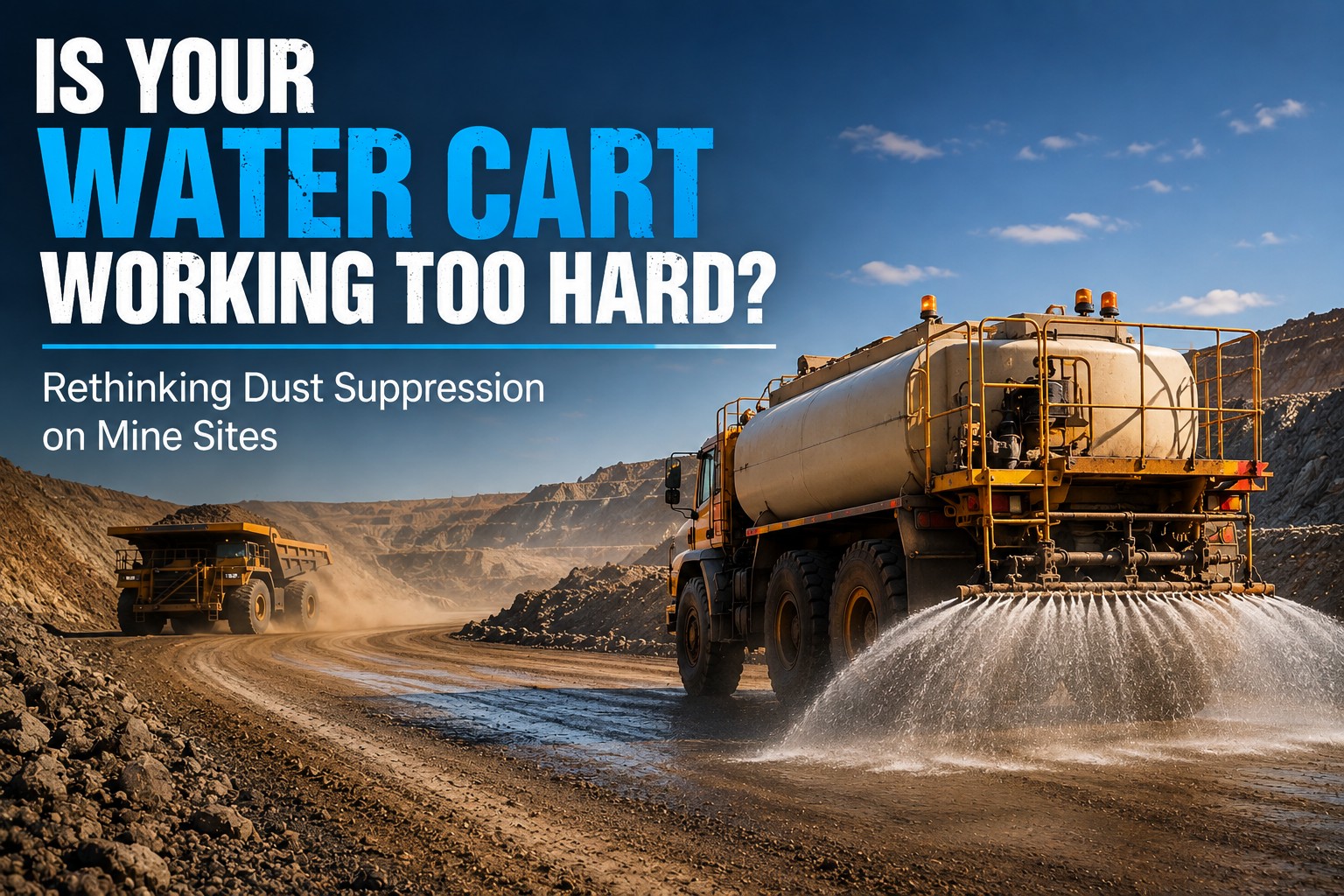
On many Australian mine sites, water carts are so closely associated with dust suppression that their constant operation can seem unavoidable. As soon as a haul road dries out & dust begins to rise, another watering cycle starts. During hot, dry or windy conditions, that cycle can continue throughout the shift. There is an important operational question worth asking: How much plant, labour, fuel & water is being committed to repeatedly treating the same road?
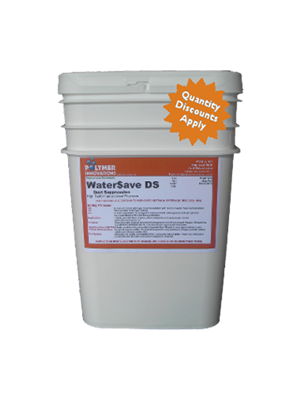
For mining companies & contractors, improving dust suppression isn't only about producing less dust. It can also be about getting more value from the equipment & resources already available on site. Water$ave Dust Suppression (DS) provides an alternative to relying on increasingly frequent water-only applications. By helping bind fine particles & retain moisture within treated surfaces, Water$ave DS can reduce watering frequency & provide longer-lasting dust control.
The Water Cart Cycle
A water cart may be necessary for dust management, but every additional pass has an operational cost. The cart requires an operator, fuel, servicing & maintenance. Then water needs to be sourced, transported or pumped, the tank needs to be refilled & the machine must travel repeatedly across the areas being treated. On a large site, this can represent a considerable amount of equipment time.
The challenge becomes particularly noticeable when conditions cause roads to dry quickly. Water is applied, the surface temporarily improves, evaporation occurs & traffic begins generating dust again. The cart then returns & the process repeats. Adding another water cart may increase capacity, but it doesn't necessarily improve the efficiency of the underlying dust suppression method.
Make the Water You Already Use Work Harder
Water$ave DS is designed to be added to water used for dust suppression. The polymer assists in binding fine dust particles while helping treated surfaces retain moisture for longer. This extends dust control beyond the temporary surface wetting achieved with water alone. For mine operators & contractors, they can more efficiently use their current water to maintain an effective road surface. Reducing watering frequency can decrease the number of cart movements required across the shift & allow the operation to achieve dust control objectives without relying solely on repeated water application.
Water Cart Hours Are an Operating Cost
The cost of dust suppression isn't represented by water consumption alone. Diesel, operator hours, tyres, servicing, maintenance & depreciation all contribute to the actual cost of operating mobile equipment. A water cart completing unnecessary additional cycles therefore carries costs well beyond the water inside the tank. Reducing the frequency of watering can lower the number of operating hours dedicated specifically to dust suppression. Even where the water cart remains part of the dust management program, improving the effectiveness of each application can make that asset more productive. It can also help reduce the pressure to introduce additional water carts simply to keep pace with rapidly drying roads.
What Happens When Water Is Limited?
The issue becomes even more important at remote operations where water availability is constrained. Dust suppression can compete with processing, washdown, construction & other site requirements for available water. Transporting or pumping additional water can also introduce further costs. In these environments, reducing water demand isn't simply an environmental objective. It is an operational advantage.
Water$ave DS is intended to enhance the effectiveness of the water already being used rather than eliminate water from the dust suppression process. Water$ave DS helps existing carts achieve more with fewer applications.
Easy to Incorporate into Existing Operations
Changing a dust suppression strategy does not necessarily require replacing existing equipment. Water$ave DS can be incorporated into water-cart & spray applications already used for site dust management. This allows operations to improve their existing program rather than introducing an entirely separate dust suppression system.
For contractors moving between projects, that simplicity is particularly useful. Treatment programs can be adapted to different road materials, traffic conditions & site requirements while existing application equipment remains in service.
Put Your Water Cart to Better Use
Water carts will continue to play an important role in mining dust management. The opportunity is to use them more efficiently. If a cart is repeatedly treating the same areas because water evaporates & dust rapidly returns, simply increasing watering frequency can mean consuming more water, diesel, labour & equipment hours without addressing the underlying inefficiency.
Water$ave Dust Suppression provides another approach: improve the performance of the water already being applied.
By binding fine particles, retaining moisture & extending dust suppression performance, Water$ave DS can help mining operations & contractors reduce watering frequency, make better use of existing plant & achieve more consistent dust management.
For sites looking to reduce the resources consumed by dust control without compromising performance, that can make Water$ave DS a valuable addition to the operation.
Need assistance or advice? Contact Us today.

Comments