

Your farm dam is one of the hardest-working assets on your property. It provides water for livestock, irrigation, gardens, fire protection & countless everyday farming activities. Like any important piece of infrastructure, it requires occasional attention to keep performing at its best. One of the biggest mistakes many rural landholders make is assuming a leaking dam will simply "settle" or improve after rain. Unfortunately, the opposite is usually true. Dam leaks rarely repair themselves. Instead, they gradually worsen as water continues to escape through the same pathways. Learning to recognise the warning signs early can save thousands of litres of water & prevent expensive repairs later.
Water Loss Isn't Always Just Evaporation
It's normal for dams to lose some water during hot Australian summers. High temperatures, wind & low humidity all contribute to evaporation. However, if your dam continues to lose water during cooler weather, after rainfall or when there has been little water usage, there may be another explanation. Leaks often develop slowly, making them easy to overlook until water levels have dropped significantly. Monitoring your dam throughout the year is one of the easiest ways to detect problems before they become serious.
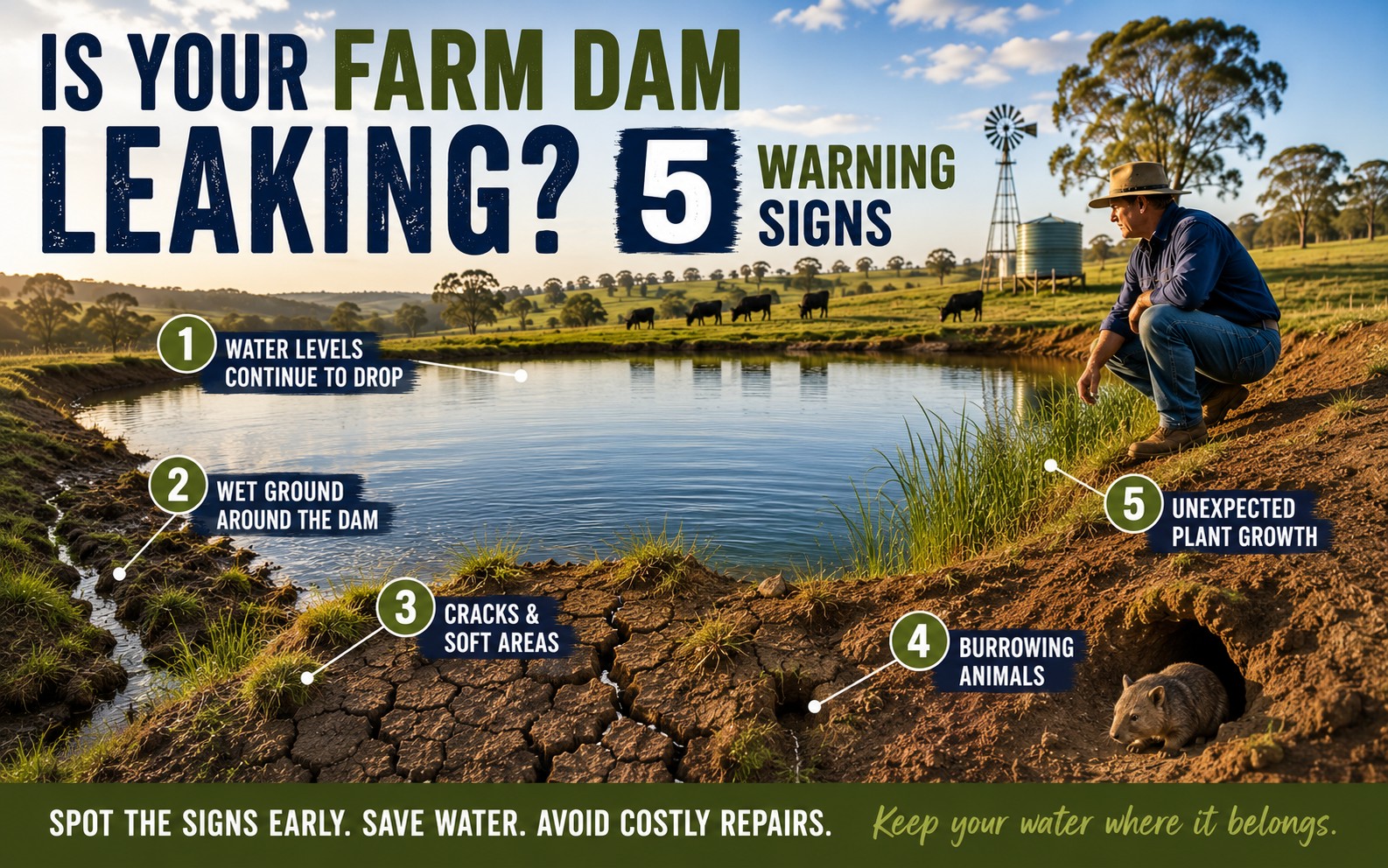
Warning Sign 1: Water Levels Continue to Drop
A falling water level is often the first sign something isn't right. If the dam loses considerably more water than nearby dams or continues falling despite recent rainfall, water is likely escaping somewhere within the structure. Rapid water loss usually indicates a larger leak, while slower but continuous losses often point to seepage through the wall or surrounding soil.
Warning Sign 2: Wet Ground Around the Dam
One of the clearest indicators of a leak is permanently damp ground below the dam wall.
Water escaping through the embankment often appears as soggy patches, muddy areas or small trickles where the surrounding soil should normally be dry. These areas frequently remain green long after nearby paddocks have dried out.
Warning Sign 3: Cracks & Soft Areas
As water moves through the dam, it can slowly wash away fine soil particles beneath the surface. Eventually this may appear as cracks, slumping or soft ground on the dam wall.
Although these changes may seem minor initially, they can indicate that internal erosion has already begun. Addressing leaks at this stage is generally far simpler than repairing significant structural damage later.
Warning Sign 4: Burrowing Animals
Australian wildlife can create unexpected problems for earth dams. Wombats, rabbits & yabbies commonly dig tunnels that allow water to escape the dam. These tunnels often enlarge over time as flowing water carries additional soil away. If burrows are visible around your dam, it's worth inspecting the surrounding area carefully for signs of seepage.
Warning Sign 5: Unexpected Plant Growth
Healthy green vegetation is normally welcome on a farm but not when it suddenly appears below a dam wall. Bright green grass, reeds or dense weed growth may indicate underground seepage supplying moisture to areas that should remain dry. While the vegetation itself isn't causing the leak, it's often one of the easiest visual clues that water is escaping.
Why Leaks Become Worse
Once water begins flowing through a crack or tunnel, it naturally follows that same pathway. As more water escapes, the flow gradually enlarges the leak, carrying fine soil particles with it. Over time this can weaken the dam wall, reduce storage capacity & eventually require major reconstruction if left untreated. Early intervention is almost always the most economical solution.
A Modern Alternative to Traditional Repairs
Many people still believe repairing a leaking dam requires draining it completely before bringing in excavators & clay. While these methods have their place, they are often expensive, time-consuming & disruptive.Today, many Australian farmers choose a simpler option.
Seal the Leak Without Draining Your Dam
Water$ave Dam Sealers provide a practical DIY solution for repairing leaking earth dams while they remain full. Rather than rebuilding the dam, Water$ave works with the existing structure. The polymer granules are applied directly to the water surface, where they sink naturally & are carried towards active leak pathways by water movement. Once inside the leak, they absorb water, expand and form a flexible internal seal that helps stop water escaping.
There are two Water$ave Dam Sealers available to suit different conditions:
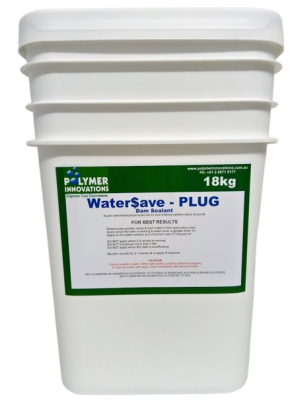
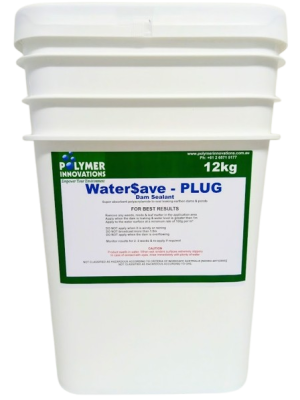
Water$ave Plug is recommended for larger leaks, coarse or rocky soils & water loss greater than 150mm per week. It is particularly effective where leaks originate from the base of the dam or where water is visibly escaping.
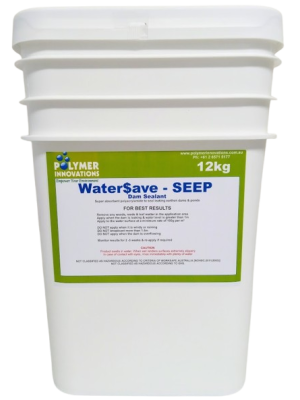
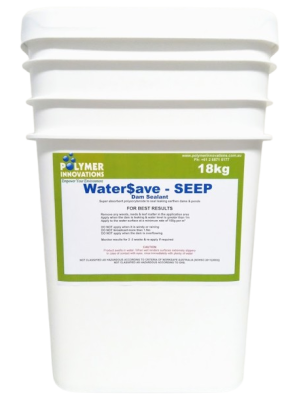
Water$ave Seep is designed for slower seepage through finer or sandy soils & is ideal for leaks occurring through dam walls or embankments where wet patches are present but water isn't visibly flowing.
Both products are completely DIY, safe for livestock & irrigation & have been trusted by Australian farmers and rural landholders for more than 20 years.
Protect Your Water Before It's Too Late
Your dam represents a valuable investment in your property's future. Every litre of water stored supports productivity, livestock health & long-term water security. The earlier you identify a leak, the easier it is to repair. Regular inspections, monitoring water levels & responding quickly to warning signs can prevent minor seepage from becoming a major problem.
If your dam is showing any of these signs, now is the ideal time to act. The team at Polymer Innovations can help assess your dam & recommend the most suitable Water$ave Dam Sealer for your soil type & leak conditions.
With Water$ave Dam Sealers, you can repair leaks the simple way; without draining, digging or disrupting your farm.

Comments