

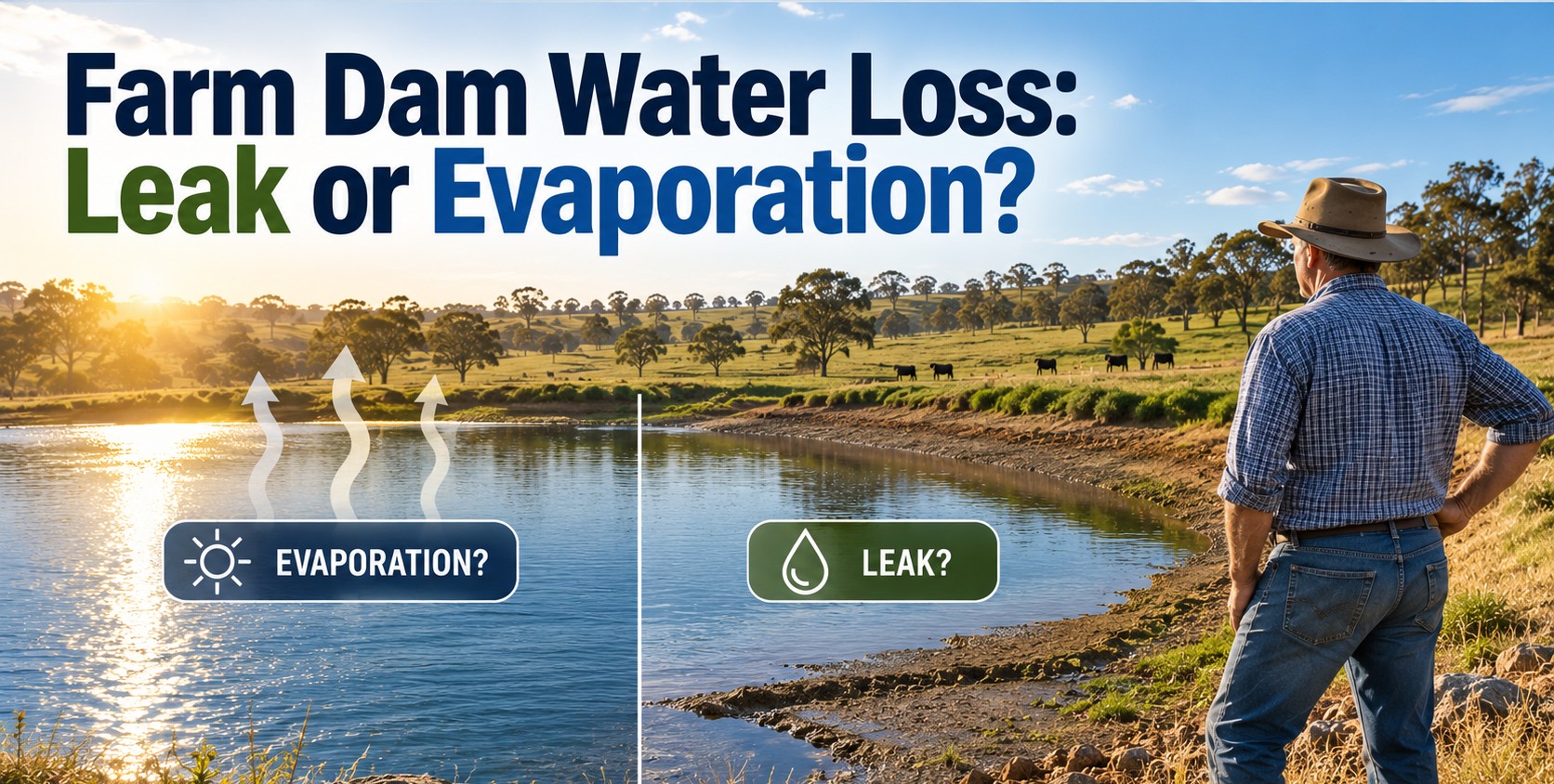
Falling dam water levels can be concerning, particularly when that water is relied on for livestock, irrigation, gardens or other day-to-day farming needs. However, dropping water levels doesn't automatically mean your dam has a leak. Evaporation, water usage & changing weather conditions can all affect the amount of water stored in a farm dam. The challenge is working out when normal water loss has become something more serious. For Australian farmers & rural landholders, identifying a leak early can help protect valuable stored water & prevent a relatively small problem from becoming more difficult to manage. Here's what to look for & what you can do if you suspect your earth dam is leaking.
Start by Monitoring the Water Level
One of the simplest ways to understand what's happening is to start measuring rather than relying on visual estimates. Choose a fixed reference point at the edge of your dam & regularly record the water level. Try to take measurements at similar times & note any rainfall, irrigation use or livestock consumption that could influence the results. Monitoring over several days or weeks can reveal a pattern. If the water level continues to fall consistently when there has been little to no water usage, particularly during conditions where evaporation alone doesn't appear to explain the loss, further investigation is worthwhile. Comparing your dam with similar nearby dams can also provide useful context. If neighbouring dams exposed to similar weather conditions are maintaining their levels while yours is falling significantly faster, leakage may be contributing to the loss.
Evaporation or a Leak?
Australian conditions can produce substantial evaporation, particularly during hot, dry & windy weather. This can make diagnosing a leak difficult during summer. Rather than assuming every drop in water level is leakage, look at how consistently the loss occurs. Evaporation varies with weather conditions. Leakage tends to produce a more persistent pattern.
Another indication of a leak appears when water loss is initially rapid but then slows considerably or stops at approximately the same level each time, the leak may be located around that height in the dam wall. If the dam continues losing water towards the bottom, the leak may instead be through the base or lower section of the dam.
Walk Around the Outside of the Dam
The problem isn't always visible from the water. Inspect the downstream side of the dam wall & surrounding ground. Look for areas that are noticeably wetter, softer or greener than the surrounding paddock. Persistent damp patches can indicate water moving through the embankment. In more obvious cases, you may find a small trickle or flowing water emerging below the dam. Pay particular attention to areas that remain wet during otherwise dry conditions. Unusually lush grass, reeds or weeds can also be useful clues. Vegetation may be benefiting from a constant underground supply of moisture escaping from the dam.
Look for Cracks, Holes & Animal Activity
Earth dams naturally change over time. Extended dry periods can cause some soils to shrink & crack. Tree roots can create pathways through embankments, while burrowing animals may leave holes or tunnels that allow water to move through the soil. Inspect the dam wall & waterline for visible cracks, animal holes, erosion, depressions or other changes in the surface. The visible opening may not necessarily show you the complete path of the leak, but it can help identify areas requiring closer attention. If you notice significant slumping, erosion, instability or other signs of structural damage, the dam should be professionally assessed rather than treated simply as a leakage problem.
Check the Soil Around Your Dam
Soil type can provide important clues about why a dam is leaking. A well-compacted earth dam needs soil capable of restricting water movement. Coarse, gravelly or highly porous material can leave larger spaces for water to travel through. Fine or sandy soils may instead produce widespread, slower seepage. Understanding the soil can also help determine which repair solution is appropriate. A simple inspection of exposed soil around the dam may reveal whether you're dealing with fine material, sand, gravel, rock or a mixture.
Estimate How Quickly You're Losing Water
Once you've established that the dam is likely leaking, measuring the rate of loss can help identify the type of leak, fast or slow. Remember to consider rainfall, evaporation, livestock consumption, pumping and irrigation when estimating the actual leakage rate.
You Don't Necessarily Need to Find the Exact Hole
One frustrating part of diagnosing an earth dam leak is that the entry point may be hidden underwater. The location where water appears outside the dam isn't necessarily directly opposite where it entered. Water can travel through cracks, porous soil & interconnected voids before becoming visible elsewhere. Fortunately, you don't always need to identify one precise hole before treating a leaking earth dam. This is where Water$ave Dam Sealers can provide an advantage.
Using Water Movement to Help Find the Leak
Water$ave Dam Sealers are designed to be applied directly to the water surface of a full or partially full earth dam. The dry polymer granules sink through the water. Where an active leak is present, water movement helps draw the product towards cracks, voids & porous areas. Once drawn into the soil, the polymer absorbs water & expands, helping form a seal within the leak pathway. This allows many leaking dams to be treated without draining, digging or excavating the dam. It also means the existing water can actually assist the sealing process.
Water$ave Plug or Water$ave Seep?
Choosing the correct product is important because different leaks require different approaches:
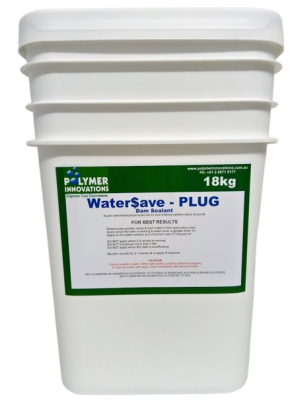
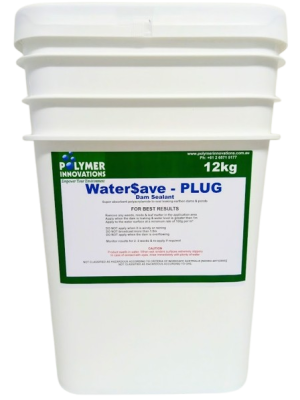
Water$ave Plug is generally suited to faster leaks, coarse soils, larger voids & leakage through the base of a dam. If your dam is losing more than approximately 150 mm per week or you can see water flowing from the outside of the dam, Plug may be the appropriate choice.
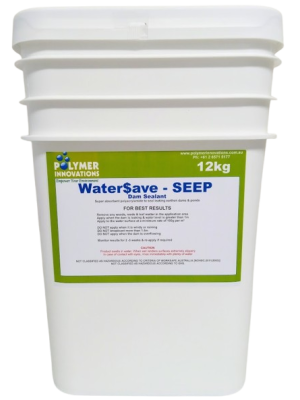
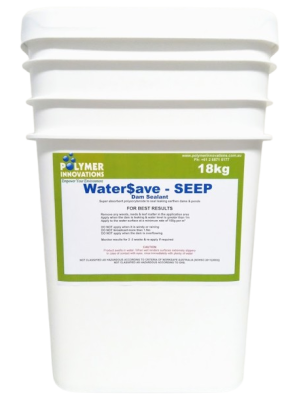
Water$ave Seep is designed for slower leakage & seepage through fine or sandy soils. It is particularly suited to wall seepage where you may see damp or wet ground without obvious flowing water.
Both products are DIY applied directly to the water surface, so there is no need to empty a valuable water supply before beginning treatment. You can always discuss your dam with a Dam Expert by Submitting Your Dam Details, if you are unsure which dam sealer is right for you.
Don't Wait for a Small Leak to Become a Bigger Problem
A leaking dam doesn't just mean a lower water level. For a working farm or rural property, it can mean less water available for livestock, reduced irrigation security & greater pressure on alternative water sources during dry conditions. Continued water movement through an earth dam can also enlarge existing pathways as fine soil particles are carried away. That's why regular monitoring is worthwhile. Knowing what is normal for your dam makes it much easier to recognise when something changes.
If you've noticed unexplained water loss, wet ground below the wall, unusual vegetation or a consistently falling water level, investigate it sooner rather than later.
Find the Right Solution for Your Leaking Dam
By considering your dam's water-loss rate, soil type & the location of the leak, you can build a much clearer picture of what's happening & select the appropriate dam sealer.
Water$ave Dam Sealers offer Australian farmers & rural landholders a practical way to repair many leaking earth dams without draining the water or bringing in expensive machinery. If your dam is losing water, contact Polymer Innovations for assistance assessing the leak & determining the most suitable Water$ave Dam Sealer for your property.

Comments